John Nicholas Amey and Anna Catharina Mueller
Johann Nicholas Emigh
6th Great Grandfather
b. abt 1689, Dannenfels, Nassau, Weibergschen, Germany
d. aft Feb, 1761, Clove Valley, Dutchess Co, New York Colony
Anna Catharina Mueller
6th Great Grandmother
b. 1693, Staudrum, Germany
d. Ulster Co, New York Colony
John Nicholas Amey was the first in the line of Ameys to come to North America.
The Snider, Amey, Stover and Hartman families are linked by intermarriages in the New York Colony and in Earnestown, Lennox and Addington County, Upper Canada. They stood together against the American rebels and moved to build new homes in Earnestown after the War of Independence. The 1874 map of Lennox and Addington County shows may farms with these family names. All are likley related to the Sniders.
Johan Nicholas Emigh was with the second Palatine party sailing from Holland to England embarking May 23, 1709.
From 1718 to1727 his name was on North Ward Dutchess County, Tax Lists; from 1728 to 1738 on the South Ward Lists; and from 1739 to Feb 1761 on the Beechman precincts list. Some of the Christenings of the Emigh children were entered on the records of the Kingston Reformed Dutch Church, and some on the Records of the the Early Lutherin Church of New York City.
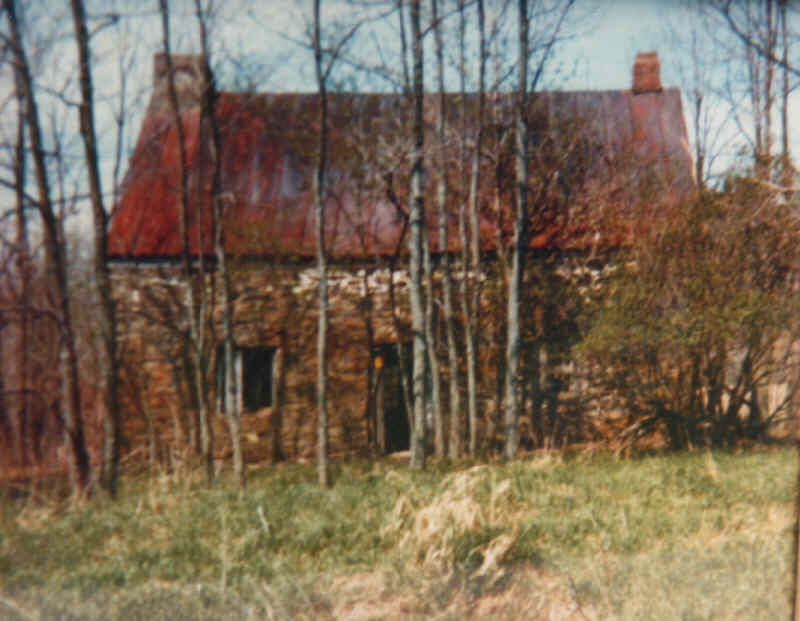
The Emighs lived among the Indians for years, taking up 900 acres of land and then later having to pay Henry Beekman for it. In 1740 Nicholas Emigh built a stone house in the Cole, Dutchess County, New York. This house is still standing. On the chimney are the date 1740 and the initials N.E. The present owner, William V. Coe says that according to tradition Nicholes Emigh lived in a log house for several years prior to the erection of the stone house.
The Records of the Early Lutheran Churches of New York City show that Johan Nicholas Emigh was his full name and those of the Kingston Dutch Church show that his wife was Anna Catherine Muller. Nicholas Emigh married Catherine on shipboard. They came to America in 1710 and their eldest son, Philip Peter Emigh, was born between the first subsistence list of 1710 and the last one dated September 1712. In some writings it says he was the first white man in the area and also had the first white child but these things have never been proven.
About 1831, a Benson J. Lossing wrote to his uncle, Peter Lossing of Norwich, Ontario Canada and great grandson of Nicholas Emigh, asking for data concerning their ancestors. He received this reply:
“Dear Nephew:
Thy letter came safely to hand and was was glad to find that thou hast a desire to enquire into the particulars that may have been transmitted to me orally or traditionally--respecting our Forefathers in their transatlantic migration to the then wilds of North America.
As respects the Lossing family my information is very imperfect. All I have been able to collect is that they Peter lossing arrived in Albany about 1676 from Montreal originally from it is said Holstein and some say part of Holland bordering on France . They settled on and owned an island below but near Albany-- this island they abandened or sold for a trifle and pitched at the mouth of Wapping Creekmade the purchase of a large tract of land of the natives under the government of Holland now New York then New Amsterdam. This deed I have seen in the low Dutch language signed by the marks of a large number of Indian Chiefs.. In 1782 (this date was changed to 1682 with different ink) they obtained a patent from Lord Cornbury then British for this tract. But Rhumbouts Patent for the Fishkill Country being given in 1780 (this date changed with different inkto 1680) supercede this and the Lossing family held only finally such parts of this land as was secured to them by 60 years of possessionaltho the receips for the Quit Rents they had regularly paid to the British Government to the time of the Revolutionary War thus for want of information they lost a tract of land commencing on the hudson River and below the mouth of Wapping Creek east as far back and that line northerly and parralel with the hudson River about embracing the whole of Wapping Creek to within 3 miles of the Village of Poughkeepsie and back to the Hudson- South of what was then called Caspers Kill.
On the other side, great grandfather from Germany, Nicholas Emigh, married on ship board to a young woman named Catherine brought with him which I have seen in the German language in excellent hand writing, a certificate signed by the pastor of the Lutheran Church of his membership and a testimonial very full in favor of his honesty and orderly life, counter signed under the great seal of State by Prince Rupert, in Queen Anne's Reign.
Under the care of one Livingston, I think Richard, commisary under assurances, as I am informed, of being furnished with locations of wild lands neccesary tools and 3 years provisions to begin life and of being furnished with locations of wild lands in the woods. They were taken up th Hudson River to a place called the Camp, a little above Reed Hook, Livingstons Manor. This mercenary Commisary as I am tradionally informed on their arrival offered them locations of land on his Manor under 21 year leases or 2 lives within annual rent leases, rendering them little or no better than his vassals under the old feudal system with stores only open to them who would submit to pay for every article, very little intercourse with the Mother country, redress under this grievance somewhat difficult being generally poor. They however fitted out one of their members with a petition and a memorial stating their grievances to New York to take shipping to England to lay before the throne of England. This envoy was known to have arrived in New York but was never heard from afterwards, whether he was bribed or butchered has never transpired. (see story of Gerhard Walroth)
The body of these poor German's then submitted to settle on Livingstons manor. But my great grandfather and his wife, one Uhl, and one Miller and their wives an such effects as they could carry on their backs with a few tools of husbandery determined not to succumb to such usage set out in a southeasterly direction thu the wilderness and travelled about 60 miles made their pitch at the headwaters of Fishkill Creek, in the Clove now Beekmantown between 2 mountains obtained a tract of the natives. My Great Grandfather took up 900 acers by after survey. The first few years subsisted on what they could raise of grain and vegatables but the use of hoe and ax and the kindness and hospitality of the aborigines. I have often heard my Grandmother in a feeling manner express her sense of Gratitude to these People of the Desert saying even, in her memory, and the account of her father and mother had given that they must have suffered more greviously than they did and charged her descendents to be kind to the few remaining descendents of this oppressed people, once the Rightful owners of the valuable now Atlantic States.
These our Ancestors lived to see the time when they thought it a very indifferent crop of wheat he could not deliver at Depuysters now Fishkill Landing in the winter 500 of wheat. In the process of time however he had to pay for the fee of his land to Henry Beekman when he and Livingston had obtained a Patent covering all his lands for 300. I need not say this family lived economically and worked very hard young and old, male and female, no spiritous liquors, no tea.
I will mention one anecdote spoken of that when a large crop of wheat was caried to the Landing the last load one of the eldest sons concluded that day he meant to purchase a dramat the store. But when he went into the store for that purpose he looked around and saw a Gimblet and concluded it would be of more service to him than six pence of rum.
They raised 8 children --6 sons and 2 daughters - Phillip, Johannes (5th Great Grandfather), Lawrence, Henry, Nicholas, and George-Anna Marie and Eve. They all married and brought up large families of children generally very healthy and none ever married a second husband or wife. And when the eldest died, I had recourse to the family register and the youngest of the family was then 75 years old. They all apparently died of old age nearly one after the other in the routine as they were born.Now they are all gone the way of all the living must and in 1810 when I left the Country the first tract of 900 acres was all of it still in the hands of the descendents od Nicholas and Catherine Emigh. I hear some parts of it is transferred out of the family having remained in the family about 170 years.”
The name Emigh or Amey derives from the Old Germanic name Emmerich meaning “work-rule”.